An ISO standard is an international text. It reads the same in Hamburg as it does in Palma and in Zurich. The route to the certificate does not.
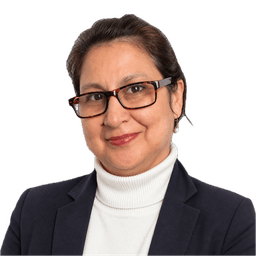
I head Eucerta España SL and regularly sit in meetings with colleagues from Zurich and Winsen. What strikes me again and again after these conversations: the standard is the easy part. The hard part is the question of why a company wants to be certified at all — and the answer is different in each of the three countries.
This article describes how Eucerta is organised, what we observe in the three markets and where the differences end: at the assessment benchmark.
“The standard is the same everywhere. The reason a company wants it never is.” – Helena Hemberger, CEO Eucerta España SL
One licensor, several certification bodies, separate roles
Eucerta is not one company with branch offices, but a structure with three deliberately separated levels. Eucerta AG in Zurich develops the platform and the AI, grants the country licences and qualifies the auditors. It does not carry out audits itself.
The country organisations are the certification bodies. They sign the contract, conduct the audit and issue the certification: Eucerta Deutschland GmbH in Winsen an der Luhe, Eucerta Certificación SL in Palma, plus Eucerta Netherlands B.V., Eucerta Türkiye A.Ş. and a partner in Vietnam. They do not provide consultancy.
[CHECK: The list follows the briefing. The page eucerta.eu/ueber-uns currently lists Vietnam as a separate country organisation in Hanoi and additionally Dubai as being set up, but does not mention the Netherlands or Türkiye there. Please decide on one version and align the article and the page.]
The third level is the consulting partners. They support the development of a management system, but they work for the client, not for us — and they do not audit the same engagement. Anyone who fails to draw this line ends up assessing their own work. We have a dedicated page on this, because the question comes up in every second initial conversation: independently certified.
The advantage of this division is unspectacular, but practical: a company with sites in several countries works in one platform, under one set of rules, with one contact person in its own language.
Germany: the standard is familiar, the patience is used up
Germany is our largest market and the one with the most prior knowledge. The Federal Statistical Office's figures for 2024 show how the economy here is built: 99.3 per cent of all companies are small and medium-sized enterprises, they employ 53.7 per cent of all people in work, but generate only 27.2 per cent of net turnover (Federal Statistical Office).
This ratio explains a lot. These are businesses with many people and thin margins — every extra day a certification project takes is expensive. The starting position reflects that: many companies know ISO 9001 from their own history or from their customers' supplier questionnaires. We do not need to create awareness. What brings German customers to us is their experience with the traditional route — two quotes, two invoices, months of lead time.
The most common pattern: a company is certified to ISO 9001 and additionally needs ISO 27001 because a major customer demands it. Instead of a second project, the result is an integrated management system — one set of documentation, one internal audit programme, one management review. In Germany, that is more persuasive than any promise of speed.
Switzerland: data sovereignty first, speed second
Switzerland is the home market of Eucerta AG and the market where the first question is almost never “How fast?” but “Where is our data held?”. The fully revised Data Protection Act has applied since 1 September 2023 and has further increased sensitivity on this point (federal overview of the revFADP).
The structure of the economy also plays a part: according to data from the Federal Statistical Office, in 2024 around 647,000 out of 649,000 companies were SMEs, i.e. 99.7 per cent, and they employed roughly 61 per cent of all people in employment (STATENT business statistics from the FSO). These are businesses without a dedicated unit for management systems — and that is exactly why they ask very precise questions about who has access to their documents.
The reaction to our express promise is interesting. Swiss customers initially meet “certificate in 48 hours” with scepticism. That is a healthy reaction, and we answer it with the same explanation as everywhere else: we do not assess faster, we simply do not make anyone wait. Anyone who gets express certification already has their management system up and running, including internal audit and management review. For everyone else there is Standard or Guided — and we say in advance what is realistic.
Spain: the mandate comes from the supply chain
In Spain the starting position is different. According to the statistics of the Ministry of Industry, just under 2.97 million of the roughly 2.98 million companies are SMEs, i.e. 99.8 per cent, and more than half of them have no employees at all (Cifras PYME, May 2026). The penetration of management systems is historically lower than in Germany or Switzerland.
The driver is almost always external. A Spanish company gets certified because it wants to bid in a European tender, because a corporate customer has written ISO 9001 into the supplier contract, or because exports to northern European markets are coming up. The motivation is therefore concrete and has a deadline — and that changes the conversations: they are less often about quality philosophy and almost always about deadlines.
What counts here is language. The platform, the audit communication and the contact person all work in Spanish. That is not a matter of courtesy, but an audit condition: a management system that employees cannot read in their working language is not lived — and that shows up in the audit.
What stays the same in all three countries
There are three things we do not change, whatever the market.
- The same benchmark. The same standard, the same depth of assessment, the same number of audit days. A certificate that was easier to obtain in one country would be worth less in every country.
- The same price. €179 per month for the first standard, €149 for each additional one, fixed price up to 30 employees, 36-month term. Calculable before the first conversation.
- The same verifiability. Every certificate is valid for three years from the audit date and can be verified by its number in the public register at eucerta.org. A buyer in Rotterdam can verify a certificate from Palma without phoning anyone.
Where there are differences, they lie outside the assessment: in the question of which standard comes first, which language the system speaks and which argument works in the initial conversation.
Conclusion
ISO standards are global, the motivation is local. In Germany we sell efficiency to companies that know the traditional route. In Switzerland we sell traceability and data sovereignty. In Spain we sell market access and meeting deadlines.
What holds these three approaches together is not a marketing promise, but a set of rules: separated roles, one assessment benchmark, one public register. That is why the same process works in three countries — and why a certificate from Palma is worth as much as one from Winsen.
Your next step: Work through the numbers for your system once — the cost calculator shows you the price for your standards before you talk to us. Or see which pace is realistic for you in the Express Check.
Further reading: